


What Changes on Safari from August Through December
There is still time to go on safari in 2026 — and choosing a departure now is less about finding the single “best” month than deciding what kind of experience you want.
Bushtracks Explorer Safaris are eight-day, small-group journeys through Zambia, Zimbabwe, and Botswana, with departures continuing through December. Each is limited to two to eight guests and follows one of three carefully planned routes:
- Livingstone and the Lower Zambezi, Zambia
- Victoria Falls and Hwange National Park, Zimbabwe
- Livingstone, Zambia and Chobe, Botswana
The camps, guiding, regional flights, transfers, and activities are already arranged. Travelers choose the route and departure date that suit them best, while Bushtracks handles the logistics on the ground.
And from August through December, the timing makes a real difference.
These months carry Southern Africa from the late dry season through the hottest weeks of the year and into the first rains. Water becomes scarce and then returns. Animals change their movements. Migratory birds arrive. Within weeks, dry grasslands can begin turning green.
There is no single ideal month across this entire period. There are simply different versions of safari.
August and September: Dry Landscapes and Concentrated Wildlife
By August, months of dry weather have thinned the vegetation across much of Zambia, Zimbabwe, and Botswana. With less foliage obscuring the view, wildlife can be easier to spot. Animals also begin gathering more regularly around dependable rivers, springs, and waterholes.
In Hwange National Park, water has an especially strong influence on wildlife movement during the dry season. Elephants may congregate in large numbers around waterholes, while predators follow the movement of prey across the park.
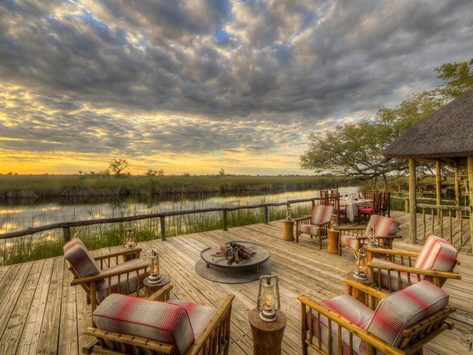
Along the Chobe and Lower Zambezi rivers, wildlife moves between the woodland and the riverbanks to drink, feed, and cool down. Game drives reveal what is happening farther inland, while boats offer a water-level view of elephants, hippos, crocodiles, and abundant birdlife.
Days are generally clear, mornings can be cool, and the dry landscape creates its own visual atmosphere. Dust softens the light and lingers behind animals as they move.
October: Activity Around Water
October is often one of the hottest and driest months in the region. Away from permanent water, the landscape can appear stark. Along rivers and around waterholes, however, wildlife activity can intensify.
Animals may travel greater distances to drink, and different species gather around the same limited water sources. Early mornings and late afternoons tend to be the most active times of day, while the midday heat slows the pace.
For travelers comfortable with higher temperatures, October can offer a particularly clear view of the relationship between wildlife and water. On the Chobe and Lower Zambezi routes, time on the river also provides a welcome change of perspective from game drives.
November and December: The First Rains Change the Landscape
The rains do not arrive according to a fixed calendar. They may begin early, late, or unevenly from one region to another. But when they come, the change can be remarkably fast.
Fresh grass pushes through dry ground. Trees begin producing new leaves. Seasonal pans refill, and wildlife is no longer tied as closely to permanent rivers and waterholes.
Animals may spread across a wider area, making sightings less predictable than during the driest months. In return, travelers experience greener landscapes, dramatic skies, migratory birds, and newborn antelope and other young animals in many areas. The arrival of young animals also creates new activity among predators.
For photographers, this period brings saturated color, cleaner air, and the possibility of dark storm clouds against newly green terrain.
Victoria Falls follows its own seasonal rhythm. Water levels are generally lower toward the end of the dry season and begin rising only after rains have fallen upstream and moved through the wider Zambezi system. During lower-water months, more of the Falls’ underlying basalt gorge is visible, revealing a very different landscape from the great curtain of water seen earlier in the year.
Which Explorer Safari Fits You?
All three Explorer Safaris include time at Victoria Falls or in the wider Livingstone region, but each continues into a distinctly different safari landscape.
For Two Contrasting Zambian Settings
Livingstone and the Lower Zambezi pairs Victoria Falls with a national park shaped by the Zambezi River.
Wildlife viewing takes place on land and water, creating opportunities to see animals from both game vehicles and boats. The contrast is a large part of the experience: several active days around Livingstone followed by the quieter rhythm of a riverfront safari in the Lower Zambezi.
This route is well suited to travelers who want to remain in Zambia while experiencing two very different sides of the country.
For a Classic Land-Based Safari in Zimbabwe
Victoria Falls and Hwange National Park combines one of Africa’s great natural landmarks with Zimbabwe’s largest national park.
Hwange is known for elephants, predators, varied habitats, and wildlife activity around its waterholes—particularly during the dry season. Much of the safari experience unfolds on game drives, allowing travelers to explore different sections of the park and follow wildlife movement over several days.
This is the strongest match for travelers seeking a classic land-based safari within a single country.
For Elephants and Wildlife Along the Chobe River
Livingstone and Chobe connects Zambia and Botswana in one compact itinerary.
Chobe’s riverfront offers a view that cannot be replicated from a vehicle: elephants entering the water, hippos occupying the channels, crocodiles resting along the banks, and birds feeding in the shallows. Game drives then reveal the wildlife and habitats beyond the river.
This route suits travelers who want to combine Victoria Falls with Botswana, cross a border without adding a long travel day, and make river-based wildlife viewing a central part of the safari.
Is it too late to travel in 2026?
No. Explorer Safari departures continue through December.
Planning closer to departure requires flexibility, particularly around international flights and remaining space. But the safari itself does not need to be assembled from the beginning. The itinerary, camps, guiding, regional transportation, and on-the-ground logistics are already in place.
The question is not whether August, October, or December is best. It is whether you want the open landscapes of the dry season, the concentration of wildlife around water, or the transformation that begins with the first rains.
Each offers a different way to experience Southern Africa — and there is still time to see one of them this year.