

What Wildlife Conservation Looks Like Behind the Scenes
Most travelers encounter conservation through its results: a rhino grazing with her calf, a pack of wild dogs moving through restored habitat, or an elephant herd crossing an unfenced landscape.
The work that makes those encounters possible is less visible. It takes place in veterinary procedures, data collection, habitat restoration, aerial surveillance, canine training, community partnerships, and decisions made by reserve teams over many years.
There is no single conservation model across Africa. National parks, private reserves, community conservancies, researchers, governments, and nonprofit organizations play different and often overlapping roles. The following are some of the field practices travelers may hear about—or, in carefully controlled circumstances, observe—on a conservation-focused safari.
Bushtracks’ 2027 journeys approach this work in different ways. Hands-On South Africa places guests alongside field teams carrying out conservation work in South Africa’s private reserves. Wild Hope draws on Ami Vitale’s decades of experience and the relationships she has built with the conservationists and communities whose stories she has documented. Both provide access that extends well beyond a conventional safari, but through distinctly different perspectives.
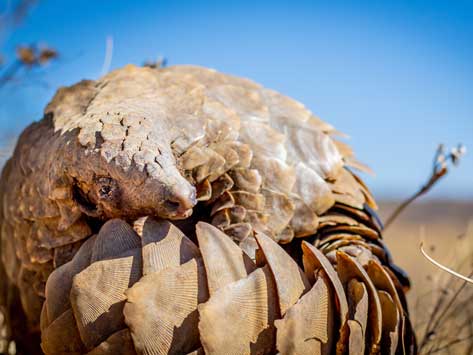
Pangolin Reintroduction Begins Long Before Release
Temminck’s ground pangolins have disappeared from parts of their former range, largely because of illegal trafficking and habitat pressures. Re-establishing a population is not as simple as moving an animal and opening a crate.
A reintroduction program may involve health assessments, gradual acclimatization, repeated tracking, and close monitoring of weight, movement, feeding behavior, and habitat use. Researchers need to know whether an individual is settling, finding food, maintaining condition, and avoiding threats. Monitoring devices and field observations provide data that guide decisions about each animal and the wider program.
At Phinda Private Game Reserve, guests traveling on Hands-On South Africa will spend time with specialists involved in a Temminck’s ground pangolin reintroduction project. Depending on conditions, they may accompany researchers into the field as they monitor an individual pangolin, assess its progress, and collect data that contributes to the species’ long-term survival. The work follows the animals rather than a predetermined schedule, with their welfare guiding every decision. That unpredictability is part of what makes the experience so rare: a chance to witness conservation as it is actually practiced.
Rhino Notching and Microchipping Create An Identification Record
Protecting rhinos depends partly on knowing individual animals. During a conservation intervention, a veterinary and field team may collect measurements and biological samples, record identifying features, notch a small and distinctive pattern into the ear, or implant a microchip. These records help teams identify and monitor rhinos over time.
Every intervention carries responsibility. A rhino is immobilized only for a legitimate management, veterinary, monitoring, or security reason. Weather, terrain, the animal’s condition, and the reserve’s operational priorities all influence whether a procedure goes ahead.
Rhino conservation is also central to Wild Hope with Ami Vitale. At Ol Pejeta Conservancy, guests will meet Najin and Fatu, the last two northern white rhinos, along with the keepers responsible for their daily care. Ami’s photographs helped bring the story of the northern white rhino to an international audience, and her long relationship with the people at Ol Pejeta opens a more personal view of the work—and the individuals—behind one of conservation’s most urgent stories.
Hands-On South Africa includes time with the conservation team at Kwandwe Private Game Reserve. Guests may be able to observe or assist during an intervention when one is operationally required, always under the direction of the veterinarians and reserve staff.
Aerial Patrols Provide Scale And Speed
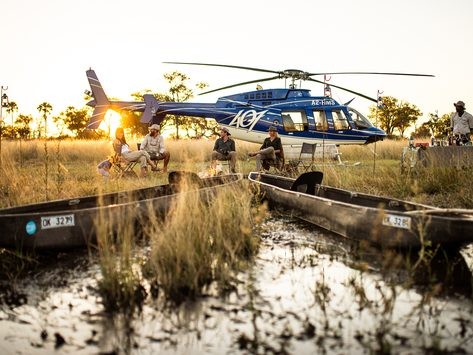
Large reserves cannot be understood—or protected—from the road network alone. Helicopters and fixed-wing aircraft allow teams to survey remote areas, locate animals, support wildlife counts, respond to incidents, and observe changes across a landscape far more quickly than a ground team could.
Anti-poaching is only one part of that work. An aerial patrol can also support monitoring, veterinary operations, fire response, and broader reserve management. On the ground, information from pilots and field rangers is combined with patrol data and local knowledge to determine where attention is needed.
In the Timbavati, Hands-On South Africa includes a helicopter patrol with a field ranger, providing a view of both the size of the reserve and the practical challenges of protecting it.
Canine Units Work Through Scent
Conservation dogs can be trained for different jobs. Some track human scent from a scene; others detect wildlife products, weapons, or ammunition. Their effectiveness depends on the partnership between each dog and handler, repeated training, appropriate deployment, and integration with the wider security team.
Meeting a canine unit provides a useful corrective to the idea that anti-poaching is a single patrol or dramatic pursuit. Much of the work is disciplined preparation: maintaining readiness, reading terrain, preserving evidence, communicating across teams, and knowing when and how to deploy a particular resource.
At Loisaba Conservancy in Kenya, guests traveling on Wild Hope will go behind the scenes with teams working to protect a 57,000-acre wildlife corridor, including the conservancy’s trained sniffer dogs. Time with the dogs and their handlers reveals how security, wildlife monitoring, and community partnerships work together across a landscape used by elephants, rhinos, wild dogs, and neighboring pastoral communities.
Vulture Monitoring Can Reveal Threats Across A Landscape
White-backed vultures range over large areas and play an essential ecological role by consuming carcasses. Their movements and survival can also reveal hazards that are difficult to detect from the ground, including poisoning events and other pressures affecting scavenging birds.
When conservation teams capture, measure, tag, and release vultures, the resulting data can help researchers study movement, habitat use, and survival. As with any wildlife handling, the work is led by trained specialists and undertaken for a defined research or conservation purpose.
During Hands-On South Africa, guests will spend time with the Endangered Wildlife Trust’s bird of prey team in the Timbavati. Depending on field requirements, they may witness the capture, tagging, and release of endangered white-backed vultures while learning how researchers use the resulting data to monitor movement, survival, and threats across the landscape. As with every wildlife intervention on the expedition, the work is led by specialists and determined by conservation needs on the day.
Conservation Also Means Protecting Connected Landscapes
Individual interventions attract attention, but long-term conservation depends on functioning ecosystems. Wildlife needs space, water, food, genetic exchange, and the ability to move. Reserve teams therefore manage habitat, monitor populations, remove or modify obsolete barriers, address invasive species, work with neighboring landholders and communities, and make decisions that may take decades to show results.
This is one reason varied landscapes matter. Wild Zambia & Lake Malawi moves through Kafue, Lower Zambezi, and South Luangwa before reaching Likoma Island, revealing how rivers, floodplains, woodlands, and freshwater systems support different species and conservation priorities. Wild Hope with Ami Vitale connects conservation stories in Kenya with marine environments in the Seychelles, expanding the frame from individual animals to the relationship between communities, land, and sea.
Wild Hope follows that larger story across several connected conservation landscapes. At Namunyak Wildlife Conservancy, the Samburu community protects wildlife across nearly 850,000 acres and operates Reteti Elephant Sanctuary, the first community-owned elephant sanctuary in Africa. At Loisaba, conservation includes maintaining an important wildlife corridor while supporting neighboring communities and sustainable livestock programs. The journey then continues to Félicité Island in the Seychelles, expanding the conversation from savanna ecosystems to the protection of coral reefs and marine life.
What Responsible Access Should Look Like
Behind-the-scenes access should never turn wildlife management into a performance. The researchers, rangers, veterinarians, reserve managers, and community leaders responsible for the work must remain in control. Activities may change or be canceled because conservation priorities, animal welfare, weather, or security come first.
For travelers, that uncertainty is part of an honest encounter with field conservation. The value is not a guaranteed photograph or checklist item. It is the chance to understand the judgment, science, patience, and collaboration required to keep wildlife populations and ecosystems functioning.
Three 2027 Journeys That Examine The Work From Different Angles
Wild Hope with Ami Vitale, February 15–24, draws on Ami’s decades of experience documenting conservation and the relationships she has built with the people leading this work. Traveling with her provides rare access to the places, projects, and perspectives that have shaped her life’s work. Wild Zambia & Lake Malawi, August 16–31, crosses several major ecosystems in Zambia before concluding on Lake Malawi. Hands-On South Africa, October 16–29, brings six guests into direct contact with field teams across Timbavati, Phinda, and Kwandwe.
These are not interchangeable itineraries. Together, however, they demonstrate an important point: conservation is not one dramatic act. It is a sustained body of work carried out by people who know the species, landscapes, and communities involved.