

Africa, Anytime: How Seasons Shape the Continent’s Most Rewarding Experiences
Africa doesn’t have an off season – only shifting conditions. Africa has experiences all year round because rainfall patterns, river levels, vegetation cycles, and animal movement continually reshape how the continent is experienced. A place visited six weeks earlier or later can feel entirely different.
If travel has a defining theme, it’s timing: understanding when landscapes transform, wildlife concentrates, and places reveal their most compelling selves. Across Africa, seasonal shifts dictate not just what you’ll see, but how you’ll feel while you’re there.
Rather than asking when to go to Africa, the better question is what you want to experience. Because across the continent, extraordinary encounters are unfolding year-round; shaped by rainfall, migration patterns, and seasonal rhythms that determine where and how the magic happens.
What follows is a guide to how season quietly shapes some of Africa’s most rewarding experiences.
Green Season Safari: Botswana’s Okavango Beyond Peak Water
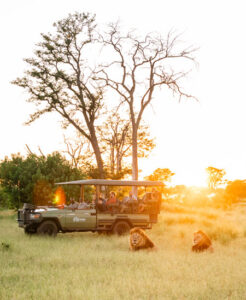
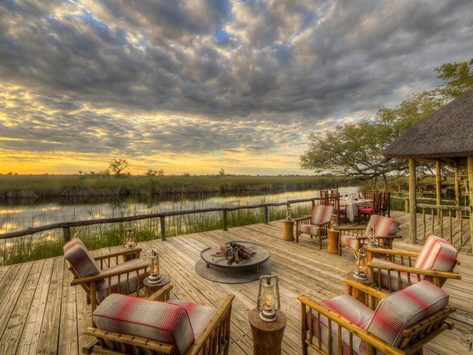
From November through March, Botswana’s summer rains transform the Okavango Delta in Southern Africa. Grasslands flush green, migratory birds arrive in force, and many antelope species give birth – triggering heightened predator activity across the ecosystem.
This period is often overshadowed by the Delta’s later flood season, yet it tells a different ecological story. Waterways are shallower, but wildlife behavior is dynamic and widely distributed. Camps are quieter, skies dramatic, and the experience feels immersive rather than iconic.
For travelers drawn to ecology, birdlife, and photographic contrast, this is one of the Delta’s most revealing phases.
This perspective is explored in greater depth in our Africa in Bloom blog, which examines how green season reshapes wildlife behavior, light, sound, and movement across Botswana’s private concessions, challenging the idea of an “off season” altogether. The same thinking informed Botswana in Bloom, a sample Tailored Safari itinerary we designed specifically around the Delta’s green season rhythms. Rather than chasing peak water levels, it embraces the Delta at its most dynamic, when regeneration is visible and the ecosystem is actively in motion.
Victoria Falls When the Zambezi Is at Full Voice
Seasonal rains upstream in Zambia and Angola gradually feed the Zambezi River, building toward Victoria Falls’ most powerful expression between roughly February and July, often peaking in April or May.
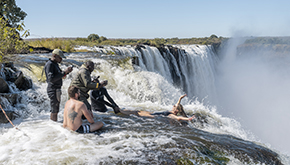
At high flow, the falls widen into a near-continuous curtain. Mist rises hundreds of feet into the air and the experience becomes fully sensory, defined by sound, vibration, and scale.
Seasonal water levels also shape how the area is explored. Guided walks on both the Zambian and Zimbabwean sides reveal mist-fed rainforest thriving along the gorge and shifting viewpoints as channels expand and contract. Upstream, calmer stretches of the Zambezi offer contrast, where rising water opens secondary channels and draws wildlife to flooded margins. Explore by boat on a Bushtracks River Safari.
Rail journeys that pause directly on the Victoria Falls Bridge add yet another perspective, suspending travelers above the gorge itself. For more information on this incredible experience visit Bushtracks Africa. Later in the year, as water levels recede, the falls thin and basalt cliffs emerge, favoring clearer photography and closer geological detail. Each phase offers a distinct way of understanding the same place.
Walking Safari in Zambia: Understanding the Bush on Foot
Walking safaris are shaped almost entirely by season. As rain tapers off and vegetation thins from May through October, tra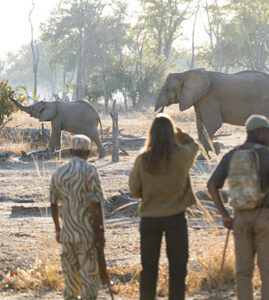 ils dry, sightlines improve, and wildlife concentrates along rivers and permanent water sources; conditions that make travel on foot both practical and rewarding.
What distinguishes a walking safari is not simply the absence of a vehicle, but the shift in attention. Movement slows. The focus broadens. Guides interpret tracks pressed into dust, leaves stripped by feeding animals, song calls moving through the canopy, and subtle changes in wind or light that influence behavior.
Wildlife sightings are still frequent, but the emphasis is on how animals use the environment; where they feed, how they move, and what their presence reveals about the health and rhythms of the ecosystem. As the dry season deepens, sightings often intensify near water, while temperatures rise, creating a natural balance between comfort and concentration.
This rhythm supports longer journeys through the region, such as Bushtracks’ Wild Zambia & Lake Malawi, which begins in the Luangwa Valley during prime walking-safari conditions before shifting east to Lake Malawi, where time on the water offers a contrasting pace shaped by the same seasonal forces.
Chobe by Water: A Safari Defined by the River
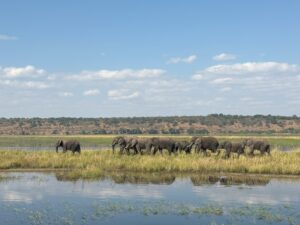
As inland water sources diminish from late May through early November, the Chobe River becomes the organizing force of life in northern Botswana. Elephants, buffalo, antelope, and predators increasingly gravitate toward its banks.
Seen from the river, safari unfolds differently. Boat-based viewing places travelers at water level; elephants swim between channels, hippos surface, birds fish at close range. The pace is unhurried and observational. Wildlife appears not because it is pursued, but because it must be there.
As the dry season deepens, animal concentrations intensify, making Chobe one of Southern Africa’s most reliable wildlife environments. These conditions also make the region especially well-suited to multi-generational travel (read our blog on Multi-generational travel): the river offers frequent sightings without long hours in a vehicle, creating a shared experience that resonates across ages. It’s one reason Chobe plays a central role in journeys such as our Safari Legends expedition, where river time balances classic game viewing and accessibility.
Desert-Adapted Rhino in Namibia’s Damaraland: Conservation at the Margins
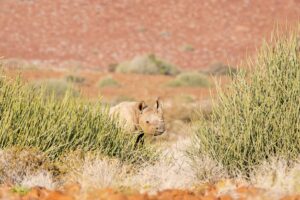
In Namibia’s Damaraland, desert-adapted black rhino survive in one of Africa’s most unforgiving environments. Rain is scarce, vegetation sparse, and water widely spaced. Tracking here is most effective during the drier months, generally April through October, when cooler temperatures and low vegetation make it possible to read tracks across sand and gravel plains.
Rhino in Damaraland range widely, often covering vast distances between food and water. Encounters are never guaranteed, and that uncertainty is central to the experience. What unfolds instead is an education in adaptation: how large mammals adjust behavior, physiology, and movement patterns to survive at ecological extremes.
This kind of safari prioritizes experienced guiding, patience, and restraint over abundance. It also underscores the role of tourism in conservation outcomes. Rhino protection in Namibia is closely tied to community conservancies, ranger programs, and tourism revenue that funds patrols, monitoring, and local employment. Here, seeing a rhino is not the only measure of success; understanding the systems that allow it to persist matters just as much. Photo Credit: Scott Ogg
The Great Migration: Presence, Pressure, and Responsibility
The Great Migration is often reduced to a single moment – a river crossing frozen in photographs – but in reality, it is a year-long ecological cycle shaped by rainfall patterns across Tanzania and Kenya. Herds move continuously in search of grazing, with different phases offering profoundly different experiences.
Early in the year, typically February through March, vast herds gather on the short-grass plains of the southern Serengeti for calving season. During this period, hundreds of thousands of wildebeest give birth within a matter of weeks. The herds are dense, the landscape open, and predator activity intense, as lions, cheetahs, and hyenas respond to the sudden abundance of vulnerable young. It’s one of the most biologically rich phases of the Migration, often experienced with fewer vehicles and a very different energy than later river crossings.
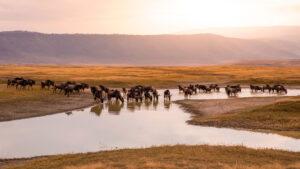
As the herds move north, river crossings emerge as one of the Migration’s most dramatic chapters. These crossings, most likely between mid-June and October, are compelling precisely because they are unpredictable. Wildebeest gather, hesitate, retreat, and surge forward again, sometimes for days, until a single movement triggers thousands to follow. When crossings happen, they are raw and unscripted. When they don’t, the waiting is part of the story.
In recent years, the Migration has also become a case study in the consequences of unmanaged tourism. Vehicle congestion, pressure at riverbanks, and crowds chasing spectacle have, at times, disrupted animal behavior with tragic results. These moments have prompted serious reflection within the safari industry about access, limits, and responsibility.
Experiencing the Migration today requires intention. Whether during the quieter calving season in the south or at less-pressured crossing points farther north, timing matters, but so does how and where you engage. The most meaningful encounters are often the least crowded ones, where presence does not become interference.
Seen this way, the Migration is not just a wildlife phenomenon, but a mirror reflecting how travel choices can either strain or sustain the systems we come to witness.
Whale Season Along South Africa’s Southern Coast
Along South Africa’s southern coastline, the meeting of cold Antarctic currents and sheltered bays creates one of the world’s most reliable environments for whale watching. From June through November, southern right whales migrate close to shore to calve, lingering for months in the protected waters of Walker Bay and the wider Cape Whale Coast.
In towns such as Hermanus, whales are often visible from land; breaching, spy-hopping, and nursing calves just offshore. The experience requires no boat: cliff paths and coastal lookouts offer sustained viewing, allowing observers to watch behavior unfold over time rather than in brief encounters.
Further along the coast, areas such as Grootbos Private Nature Reserve sit at the intersection of marine and terrestrial ecosystems. Here, whale season coincides with peak coastal conditions: clear winter light, active seas, and landscapes shaped by the fynbos biome, one of the most botanically diverse regions on Earth. The result is a layered wildlife experience, where marine mammals offshore are complemented by birdlife, beach walks, and elevated coastal vantage points.
Timing influences not just numbers, but behavior. Early in the season brings fewer whales moving through; later months often see mother-and-calf pairs lingering close to shore, offering prolonged observation and a quieter, more intimate encounter. It’s a reminder that some of Africa’s most compelling wildlife experiences happen far from the savanna, and unfold slowly, at the edge of land and sea.
Gorilla Trekking: Timing for Terrain, Not for Gorillas
Mountain gorillas can be tracked year-round in Rwanda and Uganda. What changes with season is not the likelihood of an encounter, but the conditions underfoot. Firmer trails during drier periods, typically June through September and December through February, make trekking less strenuous and allow for more predictable hiking times. During wetter months, forests are lush and atmospheric, but trails become muddy and physically demanding.
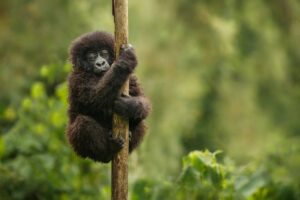
Timing also matters in how gorilla trekking fits into a broader safari. In Bushtracks’ Fall/Winter magazine, one cross-border journey illustrates this clearly: a first-time safari couple began with classic big-game viewing in Kenya, moving through Nairobi National Park, the Masai Mara, Laikipia, and Lewa Conservancy, before ending in Rwanda’s Volcanoes National Park. Read the article here on page 35/36.
By scheduling gorilla trekking in February–March, the journey balanced manageable trail conditions with a natural progression from wide-open savannas to the intimacy of the forest. Two gorilla treks, followed by a golden monkey encounter, provided a powerful finale, shifting the focus from scale and spectacle to stillness and connection.
The example underscores a broader truth about gorilla trekking: timing is as much about how and when you arrive as it is about the trek itself. When thoughtfully sequenced, it becomes not a standalone experience, but a deeply resonant conclusion to a well-paced African journey. Download our Fall/Winter Magazine here.
Choosing the Moment That Matches You
Africa offers extraordinary experiences in every season, but never in the same way twice. Rivers rise and fall. Grasslands green and fade. Wildlife adapts, moves, and concentrates in response.
The most rewarding journeys come from matching the moment to the experience you want most. Because in Africa, something remarkable is always underway. The art is choosing which version of it you want to meet.