


Inside Ol Pejeta Conservancy: The Front Lines of Rhino Conservation
There are places in Africa where wildlife feels abundant, cinematic, almost untouched. And then there are places where the reality of conservation is impossible to ignore.
Ol Pejeta Conservancy is one of them.
Located in central Kenya, between the foothills of Mount Kenya and the Aberdare Range, Ol Pejeta is not just a wildlife conservancy. It is one of the most active and progressive conservation areas on the continent – a place where the future of endangered species is being shaped in real time.
What makes Ol Pejeta Different
Unlike many safari destinations that focus primarily on wildlife viewing, Ol Pejeta operates at the intersection of tourism, conservation, and community.
It is home to:
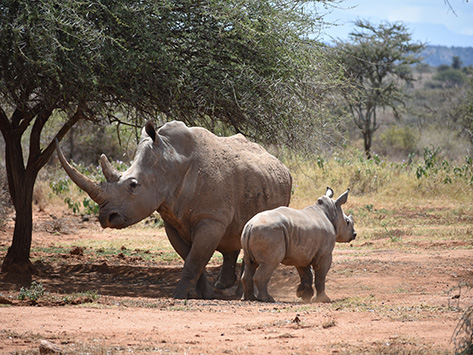
- The largest population of black rhinos in East Africa
- A sanctuary for chimpanzees rescued from the illegal wildlife trade
- One of the most sophisticated anti-poaching programs in Kenya
But what sets it apart is not just what exists here – it’s how actively it is protected.
This is a conservancy where conservation is not a concept. It is daily, visible, and urgent.
The Last Northern White Rhinos
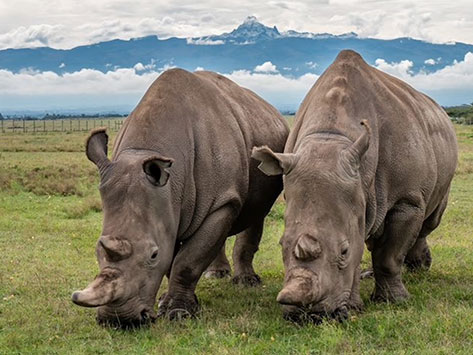
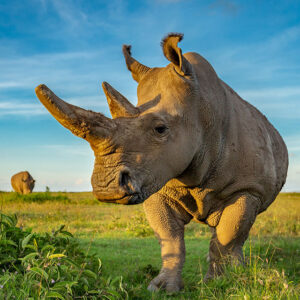
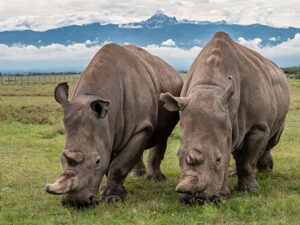
Ol Pejeta is the last place on Earth where northern white rhinos still exist.
Only two remain.
Both are female, and both are under 24-hour armed protection.
To stand near them is not a typical wildlife experience. There is no illusion of wilderness untouched. Instead, there is a profound awareness of what has been lost – and what is still being fought for.
Around them, a global scientific effort is underway. Researchers, veterinarians, and conservationists are working to bring the species back through advanced reproductive technologies.
It is one of the most ambitious conservation efforts in the world.
And it is happening here.
Conservation in Action
Conservation at Ol Pejeta is not behind the scenes – it is embedded into the landscape.
Rangers patrol the conservancy daily.
Canine units track illegal activity.
Veterinary teams respond in real time to injured animals.
There is a level of coordination here that feels closer to a protected operation than a traditional safari setting.
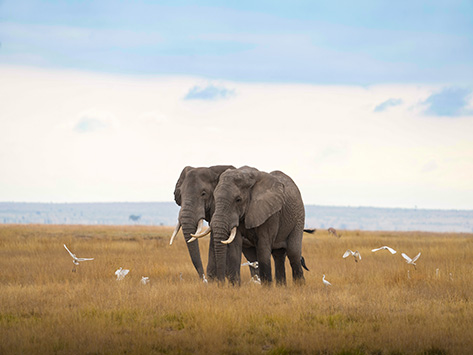
And yet, life continues all around it – elephants move across the plains, lions rest in the grass, and rhinos graze under watchful eyes.
It is a place where protection and wildness exist side by side.
The Human Element
What makes Ol Pejeta truly effective is not just its wildlife programs, but its integration with surrounding communities.
Revenue from the conservancy supports:
- Local education initiatives
- Healthcare access
- Employment and training programs
Because conservation, at its core, is not only about protecting animals — it is about creating a system where people and wildlife can coexist.
Without that balance, conservation cannot last.
A Different Kind of Safari
A visit to Ol Pejeta feels different.
Yes, there is exceptional wildlife viewing.
Yes, there are beautiful landscapes and moments of stillness.
But there is also something more grounded, more real.
You leave with:
- a deeper understanding of conservation challenges
- a connection to the individuals doing the work
- and a clearer sense of what is at stake
- It is not just about what you see.
It is about what you begin to understand.
In a world where wildlife experiences are often curated for comfort and distance, Ol Pejeta offers something more direct.
It is a place where conservation is not a backdrop – it is the story itself.
Learn more about Ol Pejeta Conservancy here.
Photo Credit: Ol Pejeta Conservancy