

Africa—the Good, the Bad, and the Transformative by Dereck Joubert
“Travel doesn’t just change where we go—it changes who we are, and what we stand for.” —Dereck Joubert
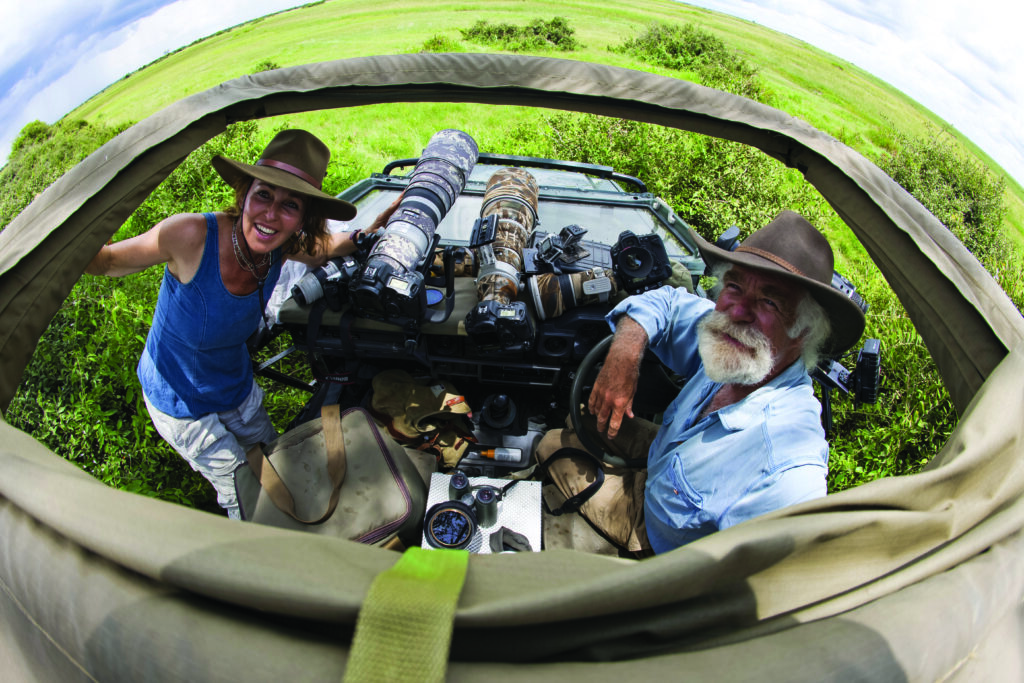
The climate is upside down. Pollution is stealing our air, our water, and even our emotional well-being. Some days, we’d be forgiven for thinking that we—humans—are the most toxic force we can apply to any pristine landscape. On those days, it feels easier to simply curl up under the duvet in collective embarrassment and disenchantment.
But I see things differently.
Years ago, I watched a little girl, no older than six, struggle to lift a small acacia sapling in a bag. She stumbled forward, planted it, and with tiny hands, gently patted down the soil in its new home. Years later, I thought I recognized her among a group of students at one of our Great Plains Kids Conservation Camps. More recently, that same familiar face reappeared—this time among our new cohort of Female Rangers. From inspired child in a remote Botswana village to full-fledged conservationist. Extraordinary.
How did we fund the tree planting, the kids’ camp, and the female rangers—who, alongside their male counterparts, just completed 7,500 kilometers (5,000 miles) of wildlife patrols? Through tourism income and contributions.

Take Somalia, our head ranger in charge of rhino conservation. He first came to us as an intern in tourism. But something happened—he fell in love with rhinos. His parents had told him stories of these great creatures, already fading into myth, captured only in cave paintings. One day, I asked for his help as we prepared to lift a rhino—sedated and slung beneath a helicopter—to move it to safety. His eyes widened. The next day, he asked to switch to conservation. Tourism paid for that moment. And for the rhino’s survival.
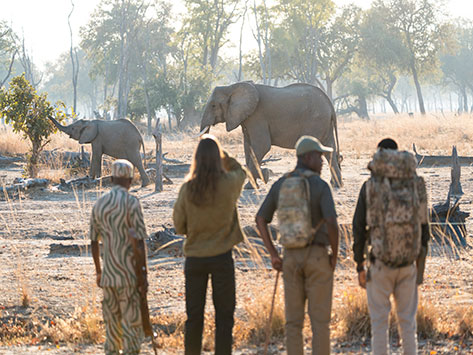
Travel goes far beyond the conservation it funds. Beyond the community projects and education efforts that improve lives across Africa. It has the power to enrich our own souls. We travel to escape the clutter of urban life. But while it may feel like a gift we give ourselves, it’s also a gift we give to those around us—because we return changed. Kinder. More tolerant. Less inclined to see people in faraway places as “other” or somehow separate from us.
It’s too easy today to fall into isolationist thinking. But sit around a campfire with the Maasai, or trade stories with one of the great Shona guides, and your worldview will shift. You’ll be less likely to return home with prejudice. Less likely to deny aid to Africa. Less likely to believe your world is superior. Instead, you return more rounded. More informed. More understanding that when it comes to the climate crisis and our species’ negative impact, we are all in this together. And only together will we find solutions. Hiding under the duvet won’t get us there.
Traveling with intention—as you will when hosted by Bushtracks—is the only way to remain on the good side of travel and avoid the bad and ugly that’s become too common in some places. We’ve seen the worst of it: crowds of vehicles chasing wildebeest crossings in the Mara. I turned away in disgust the last time I was there—250 vehicles rushed in and disrupted the migration. The animals turned back, and hundreds drowned. This kind of “migration madness” is tourism at its worst.
At Great Plains, we actively avoid this. We seek out smaller crossings downriver—private, quieter moments. We’ve even asked ourselves whether we should leave the Mara altogether. But our conservation efforts and support for local communities help counterbalance the “ugly.” We work in private conservancies, where exclusive experiences allow for deeply personal, rewarding journeys—with purpose.
We plant trees to offset the carbon guests produce flying to our camps. In fact, our camps are now beyond carbon neutral—we absorb carbon. With our guests’ support, we’ve moved 101 elephants to safety, rescued zebras, giraffes, impalas, cheetahs, and lions. We’re planning rhino relocations next. We’ve hired dozens of rangers and funded over 250 rangers and their families across nine African countries. Guests have also helped us send women from Botswana to India to learn solar technology and distributed hundreds of solar panels to homes in need.
If you’re moved to support conservation, ask your safari planner in advance. Expressing your interest can open doors—connecting you with on-the-ground conservationists, local communities, or projects you can witness firsthand. These aren’t just add-ons—they deepen your safari.
Before you travel, work with your safari designer to curate an experience that strikes the right balance: meaningful, low-impact, and lasting in its contributions. Because when you leave—hopefully with beautiful memories and a transformed perspective—you’ll also leave something behind: a sense of shared responsibility, and a greater awareness that we are all part of something bigger than ourselves.